Hospital Series on Services: Part 2 Respiratory Therapy
Posted on Friday, November 6th, 2026
Respiratory Care Vital in ER and Clinic
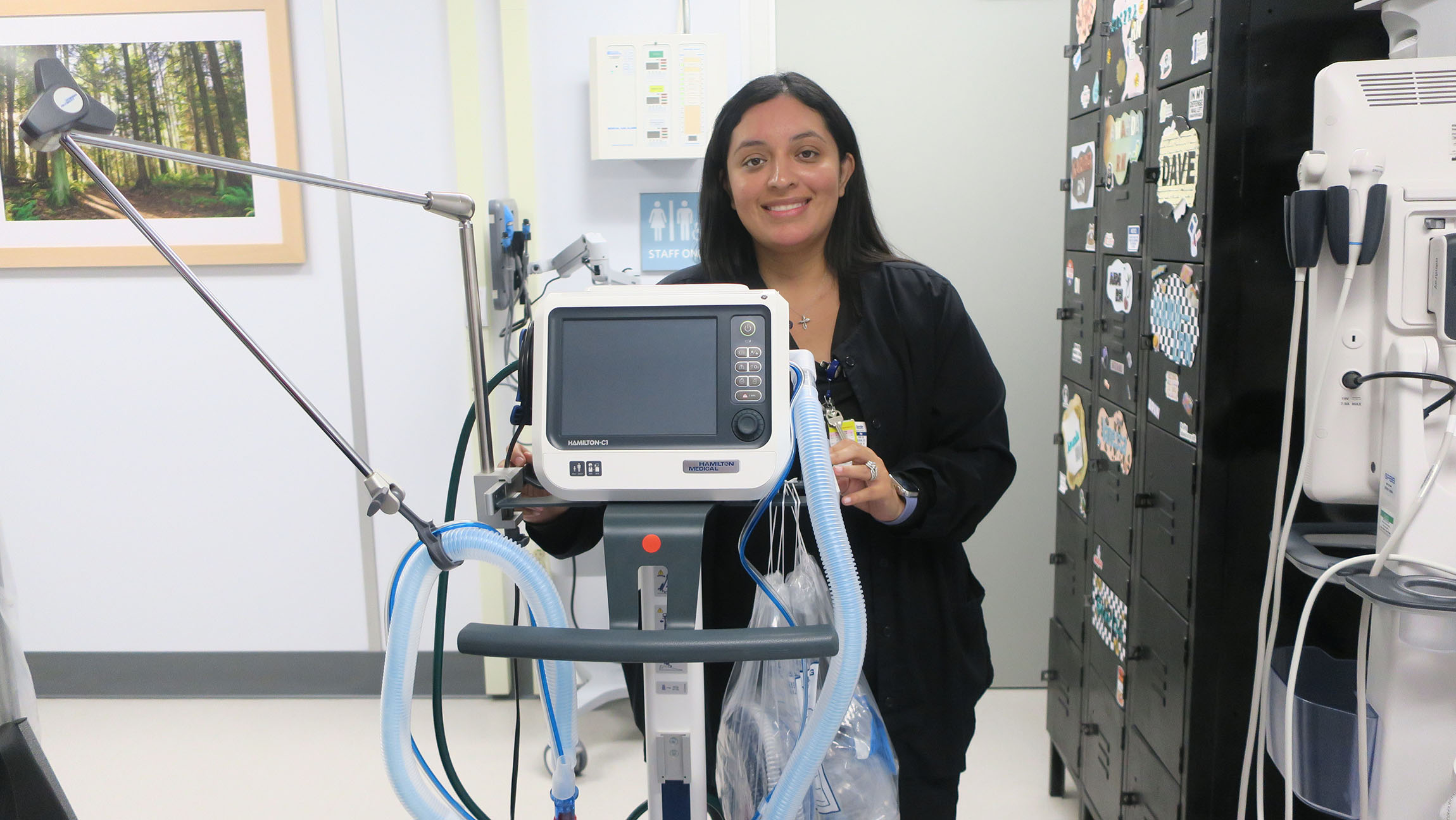
Respiratory Care in the ER: Repiratory Therapist Beatriz Trevino
Scott, RRT, displays the Hamilton C1 Ventilator for breathing support.
Respiratory care focuses on the treatment of disorders that affect a person's ability to breathe. Testing, treatment, and emergency intervention are available at Mercy Health Love County Hospital and Clinic.
Patients may be diagnosed with asthma, chronic obstructive pulmonary disease (COPD), cystic fibrosis, pulmonary fibrosis, chronic bronchitis, or emphysema. Test results may also be used to determine a patient's eligibility for surgery.
Beatriz Trevino Scott, a seven-year staff member, supervises the department as a Registered Respiratory Therapist. She is active in both the emergency room and clinic.
The tornado that severely damaged the hospital in 2024 had a silver lining. New respiratory equipment was acquired when services resumed, and additional respiratory services and equipment are anticipated when the new hospital opens.
Scott said the popular pulmonary rehabilitation program will return. Patients will attend a number of sessions in the therapy center of the new hospital, where they will participate in weight lifting, treadmill exercise, and education under the guidance of respiratory therapists. Increased strength often leads to improved breathing.
"We plan to expand our offerings with complete pulmonary function studies," Scott said. The new equipment will include a Platinum Elite body plethysmograph by MGC Diagnostics, an airtight chamber in which a patient sits and breathes while measurements are taken.
The machine measures how much air moves into and out of the lungs. Particular attention is given to the volume of air in the lungs after taking the deepest possible breath, after normal exhalation, and after exhaling as much air as possible.
Low scores in any area can indicate breathing disorders.
Emergency Room Respiratory Care
In the emergency room, Scott uses her expertise to help open airways for patients who arrive with breathing difficulties.
The Hamilton C1 Ventilator serves infants, children, and adults. A breathing tube is connected to a BiPAP mask that fits tightly over the patient's nose and mouth. The other end of the tube connects to the ventilator, which pushes air into and out of the mask as a temporary respiratory aid for patients who can still breathe independently.
The BiPAP mask provides two pressure levels: a higher pressure during inhalation to help fill the lungs and a lower pressure during exhalation to make breathing out easier.
For more seriously impaired patients, a breathing tube is inserted through the mouth or nose directly into the windpipe in a procedure known as intubation. The ventilator then breathes for the patient at a preset rate, delivering oxygen-rich air into the lungs and assisting with the removal of carbon dioxide.
The Philips Respironics V60 Non-Invasive Ventilator supports breathing by delivering pressurized air through a mask without inserting a tube into the windpipe.
The Fisher & Paykel Airvo 2 delivers heated, humidified oxygen through a nasal cannula, a tube divided into two prongs that fit into the nostrils. This system enhances patient comfort while supporting respiration.
Diagnostic Testing for Clinic and Other Outpatients
The Respiratory Department also performs diagnostic testing to help providers in the clinic and elsewhere diagnose and treat conditions affecting the lungs and heart.
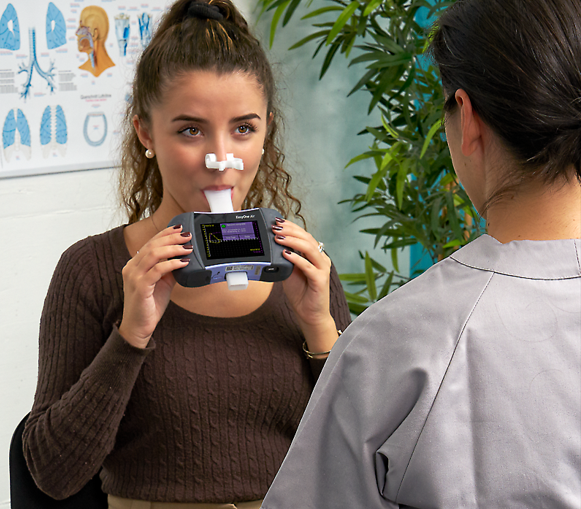
The EasyOne Spirometer is used to evaluate lung function. During the test, the patient takes a deep breath and exhales into the spirometer as forcefully and as long as possible. The device records the results, indicating whether lung diseases such as asthma or COPD are reducing lung function and to what extent.
The Six-Minute Walk Evaluation helps determine whether a patient qualifies for home oxygen therapy.
Scott walks alongside the patient, recording the distance covered and monitoring any changes in oxygen levels during activity. If oxygen levels drop significantly, the results may provide the documentation needed to prescribe home oxygen.
The test is conducted in the hallways of the clinic building. A pulse oximeter attached to the patient's finger measures heart rate and blood oxygen levels. The patient walks back and forth at a self-selected pace for exactly six minutes while the measurements are recorded.
The GE MAC VU360 EKG machine evaluates heart activity. Electrodes are attached to the patient's arms, legs, and six locations on the chest. The sensors transmit signals to the machine.
The EKG produces an electrocardiogram, a graphical display of heart rate (the number of beats per minute) and rhythm (the pattern of intervals between beats) shown on both the monitor and a printed report. Abnormal wave patterns may indicate areas of heart damage or reduced blood flow.
EKG results help providers identify arrhythmias, evidence of previous heart attacks, and narrowed or blocked coronary arteries that may cause chest pain. The test can also evaluate how well a pacemaker or other cardiac treatments are working.
For diagnostic testing, the respiratory department’s hours are 8:00 a.m. to 4 p.m. The phone number is 580-276-3347 or 580-300-3228.